



If One Strand Breaks on a Multi-Strand Necklace....
Do You Have to Restring All of Them?
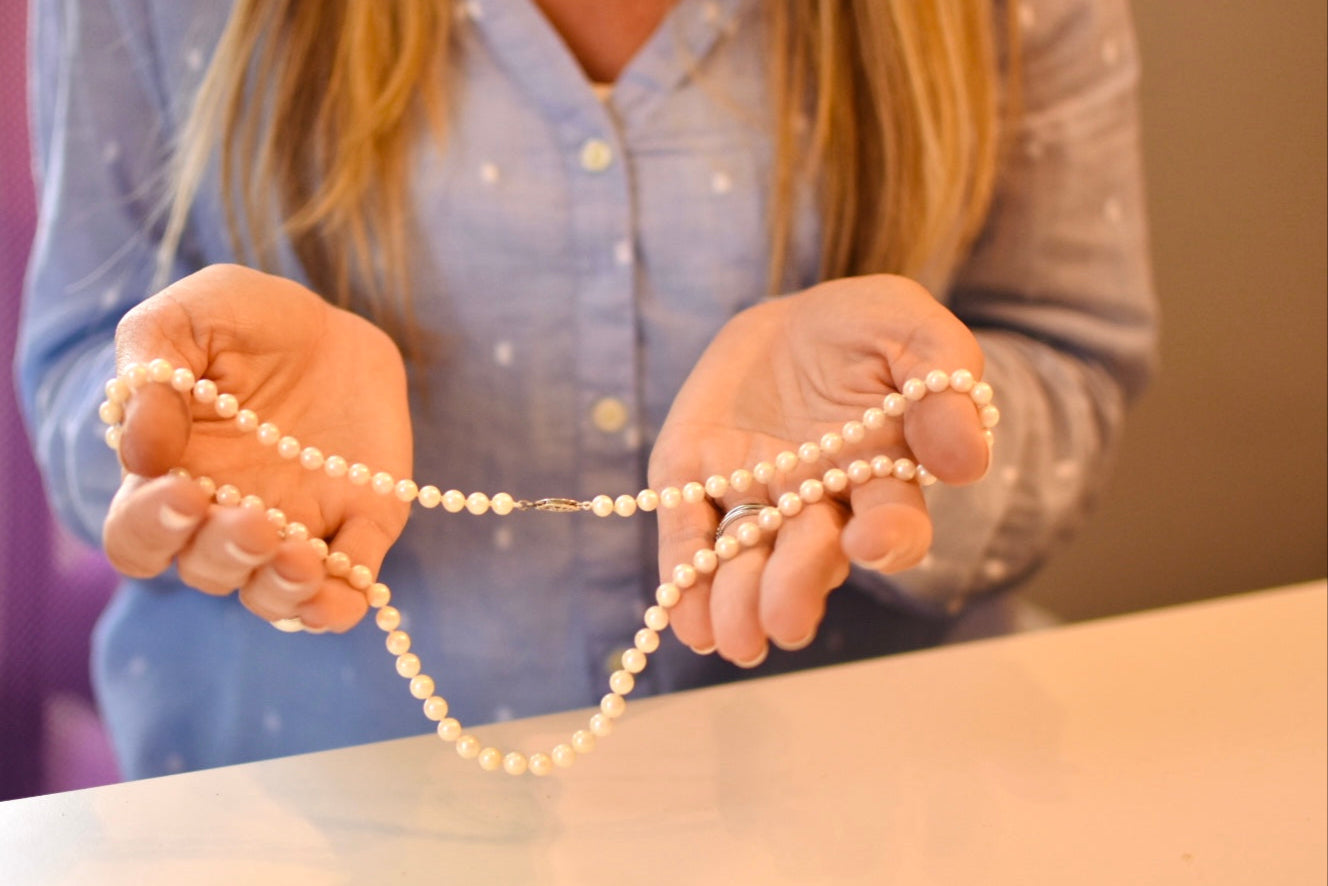
A customer mailed in a three strand necklace... from the Pucci store in Miami! She works there! We were so excited to get a package from Pucci! :)
Here was the issue with her necklace... only one strand broke! So, what do we do if only one strand of a multi-strand necklace breaks?
“Only one strand broke. Can we just fix that one?”

That sounds reasonable.
But in multi-strand jewelry, this is where a quick repair can quietly turn into a recurring problem.
Because the strands may look independent —
they aren’t.
They function as a matched system.
Why Multi-Strand Necklaces Age Together
Even though there are separate strands, they were originally built at the same time using the same materials.
That means they’ve also experienced the same:
-
stretching
-
friction
-
body oils
-
knot compression
-
wear inside the clasp
So when one strand fails, it usually isn’t the only worn strand.
It’s just the first one to reach the breaking point.
Think of it like a set of tires — one goes flat first, but the others are at nearly the same mileage.

What Happens If You Only Repair One
Let’s say we restring only the broken strand.
Now you have:
-
one brand-new tight strand
-
two older stretched strands
They no longer share tension equally.
So the necklace begins fighting itself:
-
strands pull unevenly
-
the new one carries more load
-
the older ones break soon after
Customers often think the repair failed —
but really the balance changed.
The Hidden Difference You Can’t See
New string and old string don’t behave the same way.
Even if the lengths match visually:
-
older silk has stretch memory
-
knots have compressed
-
beads have worn channels
So a partial repair introduces imbalance into something designed to work together.
And jewelry always reveals imbalance over time.

When One-Strand Repair Does Make Sense
There are a few cases:
-
temporary fix for an upcoming event
-
very new necklace with isolated damage
-
low-value fashion jewelry where longevity isn’t critical
But for heirloom or frequently worn pieces, it usually leads to repeat visits.
Not because of poor workmanship —
because of predictable material fatigue.
Why Jewelers Recommend Restringing All Strands
It’s not upselling.
It’s resetting the clock.
Restringing all strands at once restores:
-
equal tension
-
even wear
-
original drape
-
long-term reliability
You’re not paying for three repairs.
You’re preventing three separate failures.
The Cost Question
Customers often compare:
One strand today vs all strands today
But the real comparison is:
One repair now + another soon + another later
vs
One complete restoration
The second option usually costs less — and avoids the inconvenience of repeated breakage.
The Rule of Matched Jewelry
Whenever parts are designed to work together —
chains, prongs, clasps, strands — they wear together.
The first failure is just the warning sign.
So What Should You Do?
If one strand breaks, ask:
“Do I want a quick fix, or do I want this piece reliable again?”
Both answers are valid.
But they are different repairs with different expectations.
Our Customer decided to save money in the short term and repair just one strand! I completely understand! I just want yall to know the risks! Here is the finished necklace!

I made a video explaining more about reknotting a multi-strand necklace! Check it out here!



%0AHere%20was%20the%20...)
Leave a comment
This site is protected by hCaptcha and the hCaptcha Privacy Policy and Terms of Service apply.